If you’ve ever rushed a campaign out the door only to spot a typo in the subject line, or worse, a confusing sentence on your landing page, you know the sting. It chips away at your brand credibility.
The good news? These issues are preventable. With the right editing process in place, you can make sure every piece of content leaves a strong impression and builds trust with your audience.
But here’s where many teams get tripped up: copy editing and proofreading aren’t the same thing.
Marketers and agencies often use the terms interchangeably, but they serve very different purposes in the content lifecycle. Understanding the difference of copy editing vs. proofreading is key to creating content that reflects your brand, engages your audience, and supports conversions.
Let’s break it down.
Understanding the Two Editing Stages
Editing is like quality assurance for your content. Just as you wouldn’t launch an app without testing for bugs, you shouldn’t publish copy without a thorough review.
Both copy editing and proofreading improve the quality of your writing, but they happen at different stages and tackle different issues. Copy editing makes sure the message is clear and compelling. Proofreading makes sure the mechanics are flawless.
For marketing teams, knowing this distinction keeps projects moving efficiently. Copy editing happens earlier, while ideas and structure can still be adjusted. Proofreading comes later, when the content is in its final form and the focus is on precision. Treating them as interchangeable often causes last-minute bottlenecks, forcing designers or campaign managers to make edits that should have been handled much earlier.
Creating truly polished content often requires multiple passes. A good editor can refine flow and tone to make the message persuasive, while a proofreader acts as the last line of defense before content goes live. Together, they safeguard both the substance and the presentation of your work.
How Copy Editing Strengthens Content
Copy editing isn’t just about cleaning up grammar. It’s about making sure every piece of content you publish is strategic, professional, and on-brand. A skilled copy editor fine-tunes the details that impact how your audience perceives your message. The result is content that is clear, credible, and persuasive.
Here’s what copy editing delivers for your business:
- On-brand messaging. Consistent tone and word choice that reinforce your brand identity across campaigns, whether it’s a product launch email or a thought leadership article.
- Stronger readability. Content that flows logically, holds attention, and guides the reader to take action is critical for moving prospects through the funnel.
- Audience alignment. Messaging is sharpened to speak directly to your target market’s needs and expectations, making sure your copy resonates rather than gets skimmed over.
For marketers, this translates into real impact. A copy editor can make a blog post more engaging to boost time on page, refine a case study so it better supports sales conversations, or align campaign copy with SEO best practices to improve search visibility. And whether you hire a writer to create new assets or bring in an editor to refine existing ones, copy editing is what turns strong ideas into effective content.
This stage is especially valuable for content that plays a role in building authority, such as thought leadership articles or long-form guides. Without copy editing, these assets may come across as disorganized or off-tone, which undercuts their impact. With it, they become tools your sales team can use confidently and pieces that strengthen your SEO footprint by keeping readers engaged from start to finish.
Copy editing turns good content into effective content. It’s the step that takes your draft from “fine” to “ready to represent your brand.”
It’s best used after your draft is complete but before design or formatting begins, because that’s when structural changes can be made without slowing down production.
The Role of Proofreading in Polishing Your Work
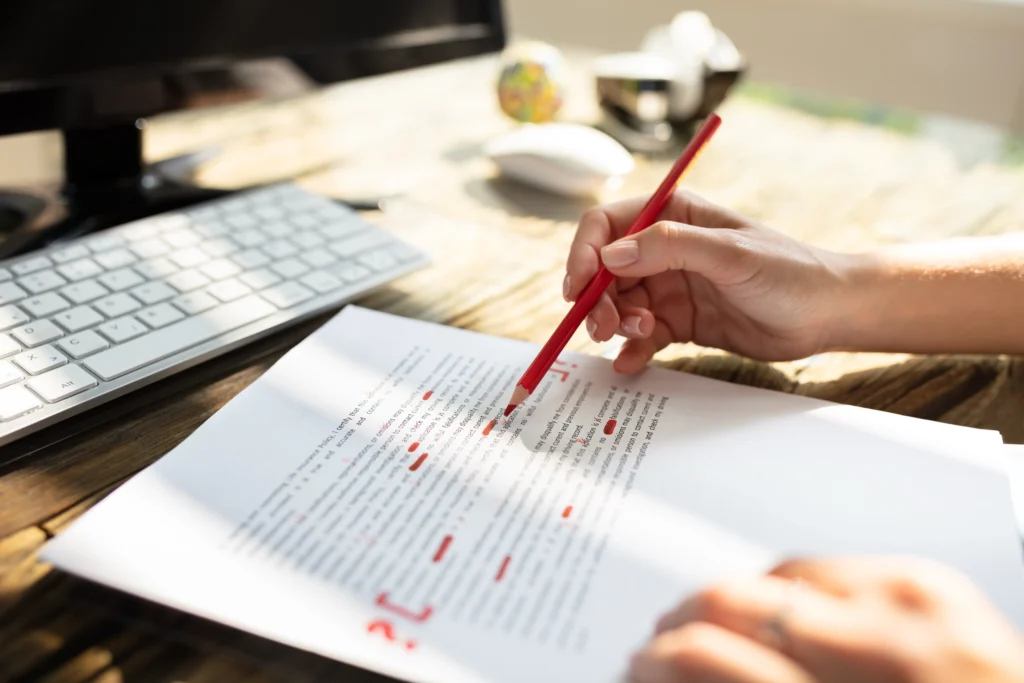
Proofreading is the last quality check before content goes live. It catches the small but important details that can distract readers or damage credibility if left unchecked.
A proofreader’s job includes:
- Catching typos, grammar slips, and punctuation mistakes
- Checking consistency across headings, lists, and captions
- Verifying details like dates, URLs, and names
Timing matters. Proofreading happens at the very end of the process, after design, layout, or upload. It isn’t the stage for big edits. Instead, it provides the final review that gives your content a polished, professional finish.
For marketers, this stage is critical because small mistakes often show up in the most visible places: a typo in an ad headline, an incorrect link in an email CTA, or inconsistent formatting in a client proposal. Any of these can cause prospects to second-guess your professionalism. Proofreading protects against these slip-ups and helps you deliver a flawless final product that reinforces your brand’s reliability.
It also saves teams from the headache of last-minute fixes. Catching an error before content is live takes minutes; catching it after means reformatting designs, resending emails, or updating published pages, all of which cost time and money. Proofreading gives you confidence that your content won’t just look polished but will perform as intended when it reaches your audience.
Copy Editing vs. Proofreading: What’s the Real Difference?
Knowing where copy editing ends and proofreading begins helps you avoid gaps that can hurt brand perception and campaign results.
- Depth: Copy editing digs into the structure, clarity, and consistency of the content, while proofreading focuses on the fine details that finalize quality.
- Timing: Copy editing happens earlier in the process, before layout or design. Proofreading happens later, once the content is in its final form.
- Responsibility: Copy editors refine ideas and messaging so they connect with your audience. Proofreaders review the finished product to make sure nothing distracts from that message.
So, when should you hire one versus the other?
- Hire a copy editor when your draft is finished but still needs refinement. This step strengthens structure, flow, and tone so the content reflects your brand and communicates your message with impact. Copy editing happens before design or formatting, when there’s still room to make meaningful changes.
- Hire a proofreader when your content is finalized and ready to publish. This step focuses on the details—typos, punctuation, formatting, or broken links—that can slip through and hurt credibility. Proofreading happens after layout or upload, providing the final review that gives your content a polished finish.
Each stage adds unique value. Proofreading without copy editing may leave content technically correct but less effective in driving results. Copy editing without proofreading can leave small errors that distract from an otherwise strong message. Together, they create content that is both polished and impactful.
Why Both Are Essential for Business-Ready Content
For marketers and agencies, every piece of content, whether it’s a blog post, case study, or ad campaign, does double duty. It’s both a reflection of your brand and a growth tool. That’s why both editing stages matter.
- Copy editing organizes your ideas into a logical structure, makes your tone persuasive, and keeps your story clear from start to finish.
- Proofreading catches the small details like typos, formatting issues, and awkward errors that could distract from your message and weaken trust.
Skipping one weakens ROI. A blog post with great structure but riddled with typos signals carelessness and damages SEO authority, making it harder to rank. On the flip side, a perfectly clean post without strategic editing may be grammatically correct but won’t convert readers because the messaging isn’t clear or persuasive. Both situations waste time, money, and audience attention.
Together, copy editing and proofreading elevate your content. Copy editing sharpens the message, and proofreading adds the final layer of polish that reinforces your brand’s credibility.
Rushed Publishing Costs More in the Long Run
Here’s the marketer’s dilemma: you’re under pressure to ship content fast. But skipping editing or proofreading often leads to bigger costs later.
- Lost credibility. One typo can make a sophisticated audience doubt your expertise.
- Lower engagement. Confusing flow or inconsistent tone can cause readers to bounce, reducing ROI on your content investment.
- Rework expenses. Spotting mistakes post-publication means paying for redesigns, reprints, or developer time to fix errors.
For agencies, the stakes are even higher. A single oversight can damage a client relationship and lead to hours of unplanned revisions. For in-house teams, mistakes mean missed opportunities—whether that’s a product launch delayed by errors in collateral or an email campaign underperforming because of confusing copy. Investing in proper editing and proofreading upfront protects not only budgets but also deadlines and reputations.
Editing and proofreading are investments in quality assurance. And just like QA in product development, cutting corners here usually costs you more in the long run.
Get It Right the First Time: Hire the Right Editor
At Freelance Writing, we connect you with editors and proofreaders who are already vetted for skill, reliability, and fit. That means:
- The top 1% of talent. Only the best make it through our process, so your content is always in good hands.
- Time saved. Instead of wading through applications, you get a curated shortlist of perfect-fit candidates.
- Peace of mind. If a match isn’t working out, we’ll replace them quickly so your projects stay on track.
Whether you need a copy editor to refine your campaigns or a proofreader to catch every last detail before launch, we’ll help you get it right the first time.
Ready to make your content brand-ready every time? Get in touch with us today.